tweakheadz.commusicians hangout      shop at zzounds!


The Guide | Rigs | Forums | Reviews | BookstoreJukebox | Blogs Search 

Tweak's Guide 
to Recording
       Success

Introduction

For Noobs
MIDI Basics
Audio Basics
Studio Rigs
Studio Pics
Past Studios
Signal Flow
System Guide
Mac vs. PC
SoundCards
Installation
Buying Gear 
Writing Music
Inspiration
Recorders
Keyboards
Controllers
CC Events
MIDI Routing
Mixers
Understanding your Mixer
Digital Mixers
Analog Mixers
Mixer Hookup
Control Surface
Microphones
Mic Preamps
Converters
Monitors
MIDI Modules
Effects
Sequencers
VSTi, DXi, RTAS, AU
Soft Samplers
Soft Synths 
Audio Plugins
Synth Prg Tips
MIDI to Audio
Cables
Studio Setup
Room Acoustics
War on Hum
Quiet Room
Dual Monitors
DJ studio
Networking
16 vs 24 bit
Timecode
Build a DAW
Tracking 
Record Vocal
Session Tips
Vocal Editing
Using EQ
Harmonizers
Guitar Tracks
Guitar Tone
Drum Tips
Drum Patterns
Hip Hop Beats
Cymbals
Sampling
Samplers
Compressors
Pan, Vol, FX
Mixing 101
Mix Methods
Mastering
Surround
Audio for Film
Podcasting
Publishing
Congratulations!
Final Exam
 
Reviews
Forums
 
JukeBox
Guitar Gallery
 
Store Links
Recording

Multitrack Recorders
Microphones
Mixers
Signal Processors
Monitors
Accessories
Studio Racks

Computer Music

Audio Interfaces
PCI
USB
Firewire
Computers
Software
Sequencers
Soft Synths/Samplers
Plugins and FX
MIDI Interfaces
Control Surfaces
DSP Cards

 Keyboards

Keyboard Synths
Samplers
Keyboard Accessories
MIDI Modules
Groove Boxes
Sounds
Keyboard Controllers
Keyboard Amps
Expansion Boards

 
Guitars, Amps,
and Effects

Electric Guitars
Guitar Effects
Guitar Amps
Acoustic Guitars
Accessories
Classical Guitars
Folk

 
Drums

Electronic
Acoustic
Drum Machines
Drum Hardware
Cymbals
Accessories
Other Drums

Accessories

Cables
Bass Guitars,
Live Sound/PA
DJ


21 ways to assemble a home recording RIG

   page 5

Page 3     1   2   3   4   5   6

A Tour through the Diverse Home Studio options available Today


Rig #16 The "It's Gotta Be Digital" Large Multi-track and DAW Rig

Who it is for:

This rig is for the professional or the advanced user who knows what it is and why they want it.  Tweak's next studio?  It could be.  It can be the mix machine for a large modular multitrack, or feeding and controlling your DAW. 

Hooking it up:  The DM3200 or its big brother the DM4800 plus the IF-FW/DM or IFFWDMMk2 interface works with Cubase, Logic  and  Sonar 4 and above.  Or, if you don't want to use a computer, the new Tascam X48 would make an excellent multi-track recorder, or with some minor modifications your ADAT or Mackie stand alone multi track. 

Another method of connecting the DM3200 to a computer is with the MOTU 2408 Mk3, which offers 24 channels of TDIF i/o that will pipe right into the DM3200 TDIF ports, which come included with the DM3200.  The 2408 will also convert ADAT to TDIF, so if you have a lot of ADAT devices, this is a way to get them in without buying an extra ADAT card.


Tascam DM4800 Digital Mixer

Tascam IFFWDM MKII 24-Channel Firewire Card

Tascam IFAN24X 24-Channel Analog I/O for X48

 
Event ASP8 Studio Precision 8 Active Studio Monitor
For those with large needs or using the X48, Tascam has recently introduced the Tascam DM4800 Digital Mixer
Tascam X48 48-Track Hybrid Hard Disk Recorder

Tascam IFAN24X 24-Channel Analog I/O for X48

Neumann U87Ai Large Diaphragm Microphone with Shock Mount and Case

 
Mark of the Unicorn (MOTU) 2408 MK3 Digital Audio Interface 
or
Tascam IFFWDM 24-Channel Firewire Card for DM24
AKG C414 B-XL II 5-Pattern Condenser Microphone
Kurzweil k2600X 88 key Production Station or suitable keyboard
          
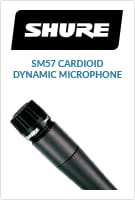
Shure SM57 Cardioid Dynamic Microphone
Shure SM81LC Cardioid Condenser Microphone
Electrovoice RE20
Apple Logic Pro Music Production Software (Macintosh)
Headphones of choice


I would cram this rig with everything I need to take on any project I want.  The board, the Tascam DM3200.  It adds an interesting twist on the digital mixer concept.  In its own write, it has scads of i/o.  16 analog i/o (mic or line, with inserts) and 4 analog returns/ 4 sends.  You can add more analog cards for more.  Digitally, there's 3 TDIF and 1 ADAT for 32 channels of digital i/o, plus s/pdif and AES/EBU.  While that is plenty, there's more under the hood.  An optional Firewire card lets you use it as a 24 channel audio interface.  Plus it works as a control surface for your DAW.  You can make it work in Mackie Control Mode or HUI emulation.  I think the possibilities are intriguing here. 

You can add mics of your choice, but I listed some of the nicer ones.  If you are going to spend this much on a mixer you probably don't need to cut corners on your mics. 

The DM3200 can operate at 24/96 with no compromises, has motorized faders, eq and compression on each channel and onboard FX.  Go read more at the Tascam site.  Also see the larger DM4800

A MIDI i/o port is included.  So add the keyboard of choice.  I love the feel of the Kurweil's.  Get some premium sample libraries if you don't have a lot of players around, but with a system like this, they will come.  We are having a discussion about the DM 3200 here.

With a rig of this caliber you can easily add better converters  via any of the main digital protocols (ADAT, AES, s/pdif (coax or TOS).  You can add premium preamps as well. 


Rig #17 Large Computer based or Multi-track based Analog Installation

Who it is for:

This rig is mainly for someone who has or wants a lot of hardware in their studio.  If you have a lot of synths, or a recording bands with 16-24 mics this makes a nice rig.  If you want to mix on real faders in the analog domain, a 24-8 like the MX9000 and an audio interface with 24 channels of analog i/o will do the job.  This is for those mixing out of the box. 

Hookup example:  

Audio interface line outs to the mixer's line inputs.  Any combination of 8 outs from the sends, direct outs or busses (sub group outs) to the audio interface line inputs.  Monitors are connected from the mixer's control room outs.  Effects devices (reverbs, delays, harmonizers) go on the mixer's sends and returns.  Mics go on the mixer's mic preamps or on standalone preamps connected to the mixer's line inputs.  Guitars connect through a direct box to the mixer's mic inputs.  Compressors (eqs, filters, limiters)  may be strapped across a bus or put on a mixer insert, depending on how you like to work.

mx9000
Behringer MX9000 or Mackie 8 bus
and a Mixdown deck (such as a Tascam DVRA1000Alesis Masterlink or CDR burner)
Any MIDI keyboard


MPD16
Multi track recorder like the Alesis HD24XR (no computer needed)


Behringer ADA8000 A/D D/A Converter Adds 8 more balanced analog i/o to the MOTU or other Audio interface that has ADAT i/o
 
Mackie HR824Mk2 and second monitoring system of choice
Various compressors (Art Pro VLA, dbx 1046, Behringer mdx1400, RNC)

Computer of choice

Logic, Cubase, Sonar, Nuendo, whatever.  Analog does not care.
An Audio Interface: MOTU 828MK2, Delta 1010, MOTU24io, RME Fireface (and computer)
Various Synth Modules, like the Fantom XR, Motif rack, Triton Rack, Roland XV5050, Virus,etc
Studio Projects C1
Shure SM57
Shure SM81
Headphones of choice


A harmonizer like the TC helicon Voiceworks Plus


As time goes on in out home studio enterprises we collect gear.  Keeping it all "online" and ready for your production becomes a challenge in itself.  Mixerless options become cost-prohibitive when you exceed 24 inputs, and this is also the case for those using all but the most expensive digital mixers.  The Analog 8-bus mixer comes to rescue.  Indeed, it is the classic approach to the large home studio that has been used for over a decade, with great results and unmatched flexibility.  Back in the late '80s and '90s this was THE approach to use.  You can add anything you want--24 track digital recorders, 16 track reel to reels, cassette, DAT, and most importantly to us now, your 8x8 or enhanced 16x16 DAW audio interface.  With the large board at the center, you can choose either the multi-track or DAW approach or even run both if you want

This system takes space, and is ideal for multi-room setups where you have a "control room" and a "studio room" where the performers play. The big 8-bus boards have a talkback monitoring system built into the mixer, to which you connect a second set of active monitors.

I chose the MX9000 for this page because I had it and love it and its relatively inexpensive.  Other options are the Mackie 24-8 and 32-8, the Toft ATB series (which we have a discussion on here) which is about all you can find under $10,000.  Pro analog boards are making a comeback and are very expensive.  All of these boards have a "Mix B" functionality which, in terms of the MX9000, gives it 48 channels, not counting the 12 returns.  You have 6 sends and 8 busses and main, control room, studio and 2 headphone outs.  What's more there are 24 inserts and 24 direct outs.  If this is not enough you can add a second mixer to it easily, making it awesome in terms of pure connectivity.  A 100 channel board is definitely within reach if you need it. You have the flexibility to record full bands, mic up drum kits, or add a huge arsenal of hardware synths and processors.  You can also use it to monitor all the outputs of your audio interfaces, connect DAT and Tape, and do bounces throughout the system, to and from computers and outboard recorders.  You can also set up a 5.1 surround monitoring system if you want. 

Add a control surface for real fader automation for your sequencer.  Yet let the analog board do the summing rather than doing pure digital bounces in the sequencer. I think you will find, as i do, that analog mixing is still a preferred way to mix, and adds an organicity lacking in much of today's digital mixes. The drawback to rigs of this nature is the incredible investment in cables and cable management one has to do. Patchbays may be as much a curse as a blessing. With so many cables in the mix you really should go balanced all the way.  This helps a lot.  We have an ongoing discussion of the MX9000 at studio-central.


Rig #18 Dual Purpose Full Band Gig/ Recording Rig

Who it is for:

Bands who need a board for their gigs, yet also need it for recording rehearsals at their home studio.  With a modular multi track recorder, the Onyx 32 can record your band on location as it provides a house mix.

Hooking it up:

The snake goes to the XLR inputs of the Onyx and Mics and line instruments are connected to the snake on stage or in the recording room.  If a Multi track recorder is used, it is connected to the Onyx 32 direct outs.  A DBX Driverack may be used to control output to powered monitors


Mackie Onyx 32
Shure SM57 and SM58 Microphone Package
Mackie HDR2496
Proco 16x4 100 foot snake
DBX DriveRack PA Control System
Suitable Powered PA Speakers
Fender 1270P Powered Stage monitor
Ebtech HE2PKG Hum Eliminator
Neutrik NYSSPPL 48-Point TRS Balanced Patchbay
Hosa CPP-Series Patchbay Cables - 1.5 feet
Headphones of choice
AKG K171 Studio Closed Headphones


Here it is. You have a band and you need a rig for gigs and you want to bring it back to your rehearsal space and be able to track that next CD, so the rig should be able to record while you are gigging too. This is not the biggest Onyx, but its a good size for the working band; it will record everything you have on stage to its own track in the Mackie HDR and mix to the mains and the performers' stage monitors at the same time. Advantages here are the sound qualities of the Onyx preamps and Perkins EQ, onboard compression and limiting to help you get the most from your PA.

In the studio it will work for recording and playback of 16 tracks simultaneously dedicating half the board to inputs and half to outputs of the recorder.  (You can reconfigure it any way you want with a patchbay, for example 8 in, 24 out, etc.). 

The Onyx 32 has 6 sends and 4 busses for configuring stage monitors and sound reinforcement.  It has direct outs on every channel for routing to a multi-track recorder.  You get inserts for adding additional gear.

On a budget, take a look at the less expensive Onyx 24  If you need a larger 8 bus format there are the bigger Onyx 2480 and 3280 consoles. 


Page    1   2   3   4   5   6


Go to the NEXT PAGE

next page

Go to the Previous Page


TweakHeadz Lab        Studio-Central        Audio-Pro-Central
About Tweak's zZounds and SameDayMusic Affiliations | Site Map | Support the Lab | Privacy Policy | ©2008 TweakHeadz.com