|
21 ways to assemble a home recording RIG
page 2Page 1 2 3 4 5 6A Tour through the Diverse Home Studio options available Today
Rig #5 Project Mix SystemWho it is for: Ideal for those working alone or recording small ensembles. For those who want to run Pro Tools M-powered but also want the flexibility to run other software. Hooking it up: Both the Project mix and the Tascam 1884 are really easy to hook up cause everything is on the "big box" connector wise. Your mics go into the XLR inputs, your synth goes into line inputs. Your monitors should be connected to the main outs. Connect your keyboard's MIDI i/o direct to the box. Both MIDI and audio will go down the firewire cable to the computer so no additional interface is needed.
Discussion of Rig #5M-Audio has a good thing going here. The Project Mix is your audio interface, mixer, control surface and midi interface all in one box. 8 preamps, ADAT, s/pdif, word clock. Total i/o is 18x14. Logic, Pro Tools M-Powered, and Cubase are supported among others. What is cool here is that you can run Pro Tools M-Powered and also run other sequencers. This makes it a bit more flexible than systems like the Digidesign 003 that runs Pro Tools LE. So get a sequencer, add a few mics, monitors, controller (or keyboard) and a Mac or PC. As always check out the other pages on TweakHeadz for advice on those items, but I think you'll enjoy this system more if you avoid the budget gear. And the good thing is, you don't need that much! Get the NI Komplete bundle to give you a whole lot of software synths, the great soft sampler, Kontakt, and many processors. The bundle is RTAS compatible as well as VST, AU and DX, so it is going to work in M-Powered as well as Cubase, Sonar or Logic. The strong point of this rig is the sophisticated automated mixing you can do in an easy to use interface. As a control surface, the Project Mix will follow and control your software mixer in the sequencer giving you a great way to "mix in the box" from outside the box. With Kontakt2 under the hood, you can add premium sample libraries at any time, giving you excellent source material. Rig #6 Old School Hip Hop StudioWho is it for: Those doing sample based music, track at a time. That includes hip hop. Hooking it up: For a pages on how to put together
an MPC based rig, go back to Signal Flow #3
and the MPC setup page.
The MPC or MV rig is simple--until you add computer MIDI/Audio
sequencer to the rig. Still there are many ways to make the MPC work
out depending on the role it plays for you.
Hip Hop and Rap rely, fundamentally, on groove. Vocals need to be big, and are aided, classically speaking, by snippets of audio captured off vinyl. These genres rose with digital sampling and when the first drum box/samplers came out they helped define the genre. The MPC4000, 2500 and 1000 are direct descendants of this lineage which began with the MPC60. The groove is tapped out on the pads, the snippets are sampled to the pads and if you want you can even assign a vocal to a pad. When you get the flow down, you can work fast on an MPC, laying down tracks to make your beats in minutes, often without pressing stop on the recorder. That is why hip hop studios like them. One approach is to do everything on the MPC. No computers, mixers are necessary. Many artists later add them for the flexibility, but you don't have to. You can also take it with you to a pro studio to print your tracks, after you tweak the beat at home. All MPCs are not equal.
The MPC2500 and MPC 1000 (and the small MPC 500) feature USB sample
transfer via compact flash cards which will make it easier to deal
with. The MPC 2000, the older version, uses SCSI to
communicate to computers. 90's technology. My opinion: Avoid it, unless
you already have a SCSI card and peripherals. The
MPC 4000 has a USB port for connecting via Akai's AK.SYS software.
You can also add ADAT digital i/o which will come in handy in a
professional studio. The 4000 also comes with a hard drive. Drives
can be added to the MPC 2500, and MPC 1000. Note that only the MPC 4000 features 24 bit recording and high sample rates. Hence it is well equipped to fit into a professional studio environment. However, many home studios will not have use for all those features, and the simpler 2500 and basic 1000 will win out. Budget studios might consider the MPC 500, the least expensive. Coming soon is the MPC5000. You can also use the MPC as a slave in a computer rig. As a slave, it works more like a sampler/sound module. It will follow the sequencer's clock and stay in time and the computer sequencer can trigger the samples remotely over MIDI. I suggest the Shure SM58 for its rich proximity effect when spoken into at close range. The Event Precision 8 monitors are known for good bass reproduction. Add a MIDI keyboard and turntable as you see fit. While most of the hardware samplers are now as extinct, the MPC has survived due to its ability to make hop hop beats. You might want to compare it to the MV8800.
Rig #7 Classic Computer Based All-Purpose Analog Mixer RigWho is it for: Ideal for those who like the "hands on"
hardware mixer approach, but want the benefits of the new software
technologies, needs to record up to 8 simultaneous tracks for the band and
keep it all reasonably priced. Hooking Up this Rig: Basically you have 2-8 channels going out of the mixer to the audio interface and 8 channels coming back from the audio interface to the mixer. This means yes you can actually mix 8 channels on the mixer! If you have hardware midi synths with sounds you can monitor those on the mixer. This kind of hardware based rig can be extended and made more efficient with a patchbay. That way you can quickly reconfigure what each channel of the mixer is doing.
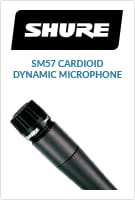
OK, lets get back to the home recording studio where our goal is to record musical performances in our homes on a computer. The hardware mixer approach has been around a long time and has the advantage of giving you more ins and outs for the money, more preamps, and real faders upon which to sculpt your mix. The Delta 1010 is a great choice for a PC mixer based rig. Since the Mackie 1642VLZ3 is providing the preamps, you only need line ins and outs here. And if 8x8 i/o is not enough, you can get an additional Delta 1010 and stack 'em for a 16x16 analog i/o system. Since we are recording vocals and instruments here we are going to start with a beefy Mic selection. The Rode NT2a is a condenser mic which is great for vocals and has the versatility to be called in for many other uses. The MD421, a dynamic mic, is good for drums, loud vocals, voice-overs and cabs. Of course you can always add the studio staple mics like the Shure SM57 (dynamic) and the SM81 (small condenser). Of course there are many great microphones around, and you don't necessarily need them all to get started. Remember from the guide the essentials are a good large condenser, a good small condenser and a dynamic. The 1642VLZ3 is a true 4 bus mixer so you will have all 4 busses routed to the audio interface. You also have 8 inserts and 8 direct outs which can be used for additional routings. You can use balanced cables for everything but the inserts and keep the noise floor way down even with long cable runs. The Mackie XDR preamps (10) are excellent, and you get 4 aux sends and 4 stereo returns. This gives you the option of hardware effects processors and enough inputs to run several synths, modules, mics. For recording guitar or bass direct you want to add the DI-100 direct box. There are many different effects processors to choose from in the hardware domain. You might consider one that has USB that can be inserted into your sequencer as a VST plugin, yet be powered as a hardware device. Lexicon has a line of processors that do this. Look at the MX200, MX400 and MX400XL. Its a wonderful system, as it lets you into both the virtual studio of your sequencer and the hardware world, and merges them together where you decide what you want to do. Don't fall into the mistake of thinking "mixerless is better". Do you really want to do everything with a mouse on a computer screen? The people who choose this rig yell back "NO!" This classic approach takes longer to set up and there are more cables, but it remains the most flexible and complete of all approaches. Want to go more upscale with digital computer connectivity
yet keep the analog type mixing? Substitute a
Mackie Onyx1640
for the 1642 VLZ3.
Rig #8 Professional Sound at a Reasonable Price Studio (PC-based)Who it is for: The FW1884 is for those who want a one box solution with a control surface that do not want to compromise on the number of ins and outs. It can record small ensembles and shines for a one person/two person rig. Hooking it Up: The FW1884 hooks up to a computer by one firewire cable which passes all the audio, midi and control surface data in both directions. Your mics (up to 8), keyboards, monitors, and headphones all connect on the back of the FW1884. That you get 4 Midi ins and outs makes this an excellent rig for someone with a lot of synths. With an ADAT expander you can add 8 more analog ins and outs
Three powerful pieces make up the core here: Sonar, your keyboard, and the FW1884. They put you right on the edge of music production technology and give you enough sounds and control to create in any music style and come up with your own signature. And if you need a sound one of the keyboards I mentioned does not have you can sample it. The Tascam FW1884 is a "multi-interface" which functions as your mixer, midi interface, audio interface and control surface. It will control Sonar's software mixer and pipe your audio and midi right into the software. Tascam is working with Cakewalk (who makes Sonar). Also take a look at the new Tascam 1082, which is lighter on the budget. There is yet another variation of this rig with the M-Audio Project Mix, which can be used with a Mac or a PC and can also run Pro Tools M-Powered, good for those who think they may want to go with a Pro Tools system, but want to keep options open to other sequencers as well. For the rest, I chose products with the highest price performance value again. The studio projects C1 sounds pretty close to a $2,000 Neumann at 1/10th the cost and T-Racks will handle many mastering chores as an alternative to a $1,500 Wave Platinum bundle. Ditto on the Truths which can sound like monitors costing 3-4 times as much. Sound Forge and CD Architect along with T-Racks gives you mastering capabilities. You can pipe audio from inside Sonar to Forge with ease, and from CD architect back to Forge for final editing. In sum, Massive Power and flexibility are yours with this system. An ideal PC based studio.
Go to the Previous Page
Want to Discuss this topic?
| ||||||||||||||||||||||||||||||||||||||||||||||||
|
TweakHeadz Lab
Studio-Central
Audio-Pro-Central |